The 100M Idea: How to Create a Business That Scales to a $100 Million Valuation
In the world of startups and entrepreneurship, there’s one number that stands above the rest—$100 million. This figure represents a significant milestone for any business, often signaling that you've moved beyond a small venture and into the territory of a major player in the market. So, what does it take to create a business that can scale to a $100 million valuation? Let's break down the components of a $100 million idea and explore how entrepreneurs can develop their vision to reach this ambitious goal.

The 100M Idea: What Does It Mean?
A 100M idea isn’t just about coming up with a cool product or service. It’s about crafting a vision that can grow rapidly and attract a significant portion of the market. The goal isn’t just revenue but scalability and the potential to capture a large addressable market. A $100 million company is often the product of a strong value proposition, efficient operations, and strategic decision-making. It has the potential to be disruptive in its industry and can adapt and expand as market conditions evolve. Think about the likes of Airbnb, Uber, and Slack — all companies that started with a clear, scalable idea and grew into multi-billion-dollar businesses.
Step 2: A Scalable Business Model
For your idea to reach a $100 million valuation, it needs to scale efficiently. A scalable business model allows your company to grow without facing significant increases in operational costs. Here are some business models that can scale well:
- SaaS (Software as a Service): SaaS companies typically have high margins and recurring revenue, making them excellent candidates for scaling.
- Marketplace models: Think of companies like Uber or Etsy that connect buyers and sellers and take a cut of each transaction.
- Product-based businesses with strong distribution channels: Whether it’s a consumer good or a B2B product, having strong sales channels and the ability to scale production is crucial.
Step 3: Focus on Customer Acquisition
One of the key drivers of a $100 million business is the ability to acquire and retain customers at scale. It’s not just about getting customers, but about building long-term, profitable relationships.
Example: Shopify Shopify’s business model is built around helping entrepreneurs set up online stores, but what has truly driven its massive growth is its customer acquisition strategy. By providing value upfront and using digital marketing, SEO, and a robust referral program, Shopify has been able to scale its customer base globally. When developing your 100M idea, think about how you will reach and retain your customers. Invest in strategies that allow you to scale marketing efforts, such as content marketing, partnerships, referral programs, and paid advertising. Utilize data and analytics to optimize your customer acquisition costs (CAC) and customer lifetime value (CLV).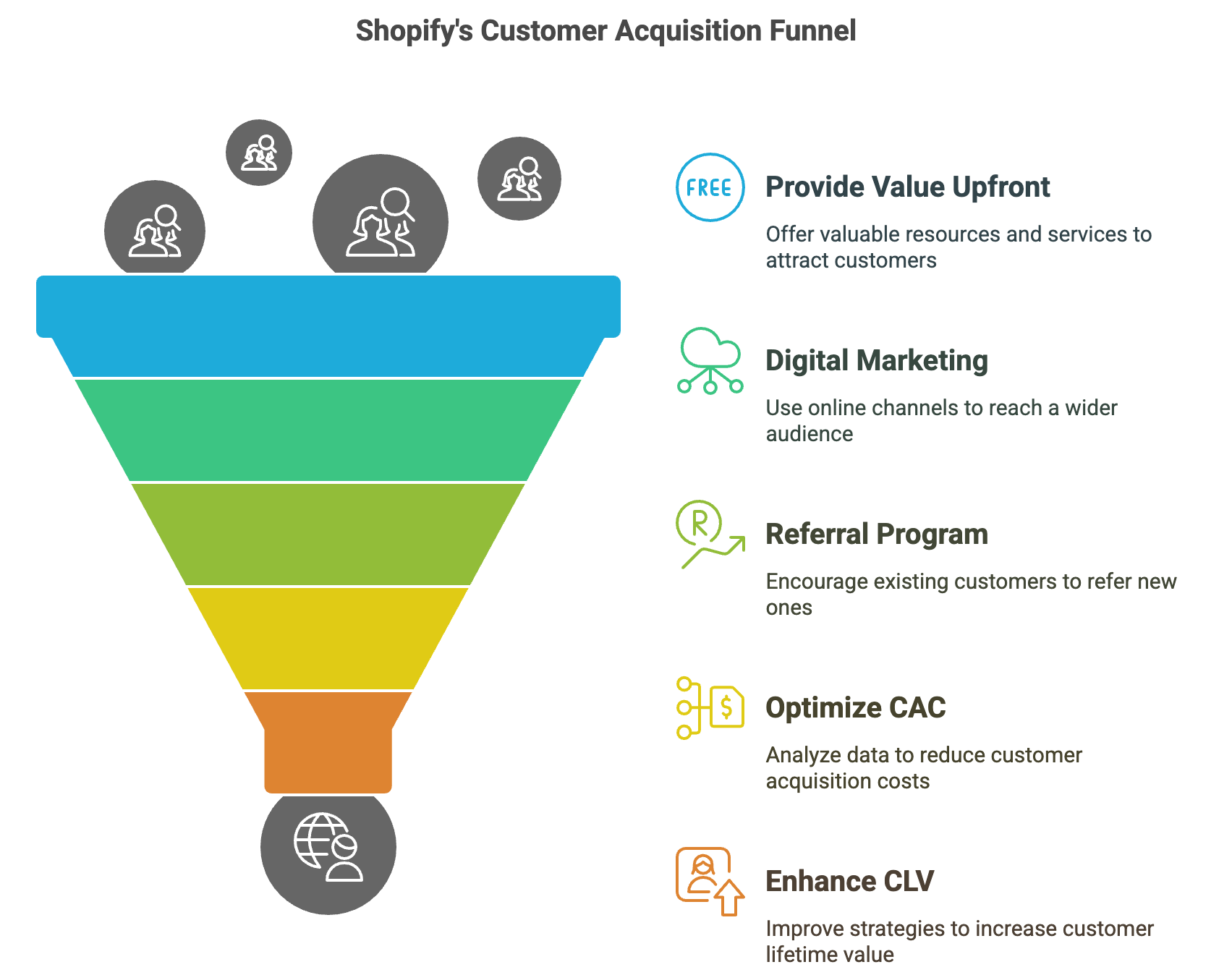
Step 5: Secure the Right Funding
Reaching a $100 million valuation often requires substantial investment to fuel growth, whether it’s in the form of venture capital, private equity, or strategic partnerships. The key is to raise enough capital to execute your vision, but without giving up too much control too early.
Example: Uber Uber’s growth would not have been possible without securing multiple rounds of funding from investors who believed in its potential. The funding allowed Uber to rapidly expand into new markets, hire talent, and improve its technology. When thinking about funding for your 100M idea, consider how much capital you need to achieve your milestones. Be strategic in seeking out investors who can not only provide capital but also bring value through their expertise and networks.Step 6: Innovate and Evolve
The path to a $100 million valuation isn’t linear. Businesses that scale at this level often have to adapt and innovate as market conditions change. Your product may need to evolve, your business model may need to pivot, and new opportunities will likely emerge. Example: Apple Apple is a perfect example of a company that continually innovated and evolved to stay relevant in an ever-changing market. From its personal computers to the iPhone and wearables, Apple’s success has been driven by its ability to constantly push boundaries. Always be prepared to revisit your idea and adapt it to changing trends, customer feedback, and technological advancements. Innovation is not a one-time event but an ongoing process.
Conclusion: Turning Your Idea into a 100M Business
Creating a 100M business isn’t easy, but it is achievable with the right combination of a scalable idea, strong execution, a high-performing team, and the ability to adapt and innovate. Start with a problem that’s big enough to be worth solving, ensure your business model can scale, focus on customer acquisition, and build a team that shares your passion and vision. The 100M idea is less about a single “eureka” moment and more about an ongoing process of iteration, improvement, and growth. If you can keep your eye on the bigger picture, stay committed to solving important problems, and remain agile as you scale, your idea has the potential to grow into something monumental. So, what’s your 100M idea? The journey starts now.
Step 4: Build a Strong Team and Culture
A great idea is nothing without the right team to bring it to life. Building a high-performing team with the skills and passion to execute your vision is essential for scaling to $100 million. You’ll need people who are experts in various areas such as product development, marketing, sales, and operations.
Example: Tesla Tesla’s CEO Elon Musk often speaks about how the company’s growth was driven by its engineering talent, but just as important was its culture of innovation and mission-driven work. The team’s belief in changing the future of transportation motivated them to overcome massive hurdles and scale rapidly. When building your company, focus on hiring people who are not only skilled but also deeply committed to your company’s mission. Foster a culture of innovation, collaboration, and resilience to drive the company forward.Step 1: Solve a Large Problem or Need
The first step to creating a 100M idea is solving a significant problem. Businesses that scale well often address issues that affect a large number of people or companies, whether it’s a need for convenience, affordability, or improved outcomes.
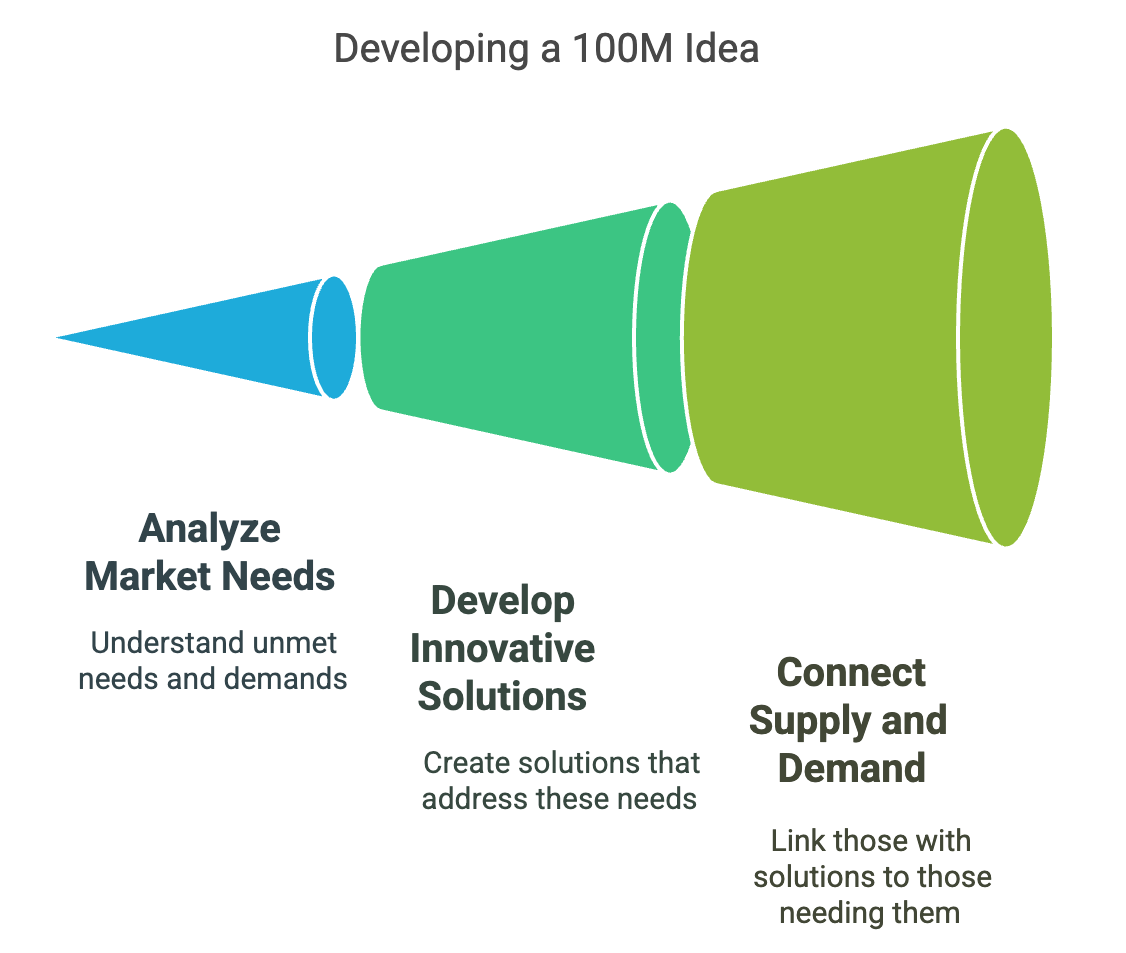
Example: Airbnb Airbnb solved the problem of expensive and limited lodging options. The founders identified that people wanted an alternative to traditional hotels, and homeowners had unused space that could be monetized. By creating a platform to connect these two groups, Airbnb transformed the travel industry. When crafting your 100M idea, think about the unmet needs in your market. Focus on large-scale problems that people are willing to pay for solutions. The more pervasive the problem, the bigger the potential for your idea.
On this page
Get the Wsla newsletter
One short email, every Friday. Product updates, creator stories, and growth playbooks.